
Trishia Kaye D. Jimenez | Lingg 225 [Field Methods in Linguistics] Class
Posted on September 2, 2026
When I first thought about fieldwork, I imagined the most important part would be the moment we sat down with participants and began collecting data: turning on the recorder, asking questions, and carefully documenting the answers. After completing our fieldwork in Magalang, Pampanga, I realized that fieldwork was much more complicated and much more meaningful than that.
Our project, Kapampangan [ISO 639-3: pam] in Magalang, Pampanga: Documentation, Language Vitality Assessment, and Archiving, brought us across the 27 barangays in Magalang. We conducted language vitality surveys, collected naturalistic and elicited linguistic data, worked with community members and PSAU collaborators, and processed recordings and metadata using tools such as ELAN, Praat, and FLEx. What I initially understood as a series of research tasks gradually became an experience of learning how language exists within communities: in conversations, homes, schools, public spaces, and in the choices people make about what language to use and when.
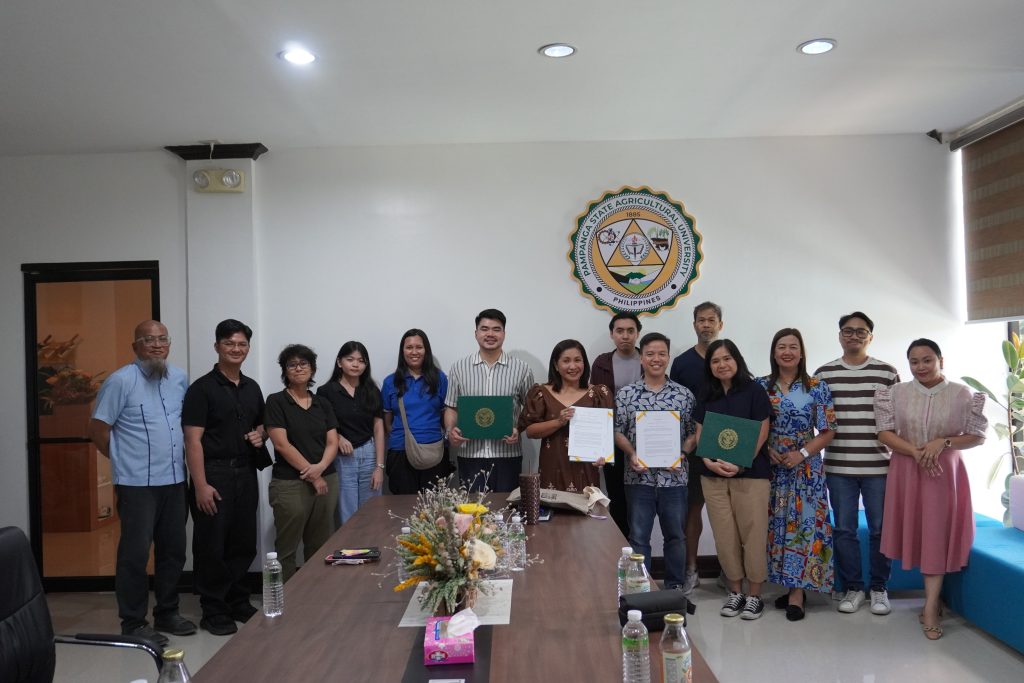
Even before the actual data collection began, I learned that language documentation starts long before a recorder is turned on. Our initial coordination with Pampanga State Agricultural University and the Municipality of Magalang established the foundation for the fieldwork. The project required not only linguistic knowledge but also coordination, trust, logistics, and collaboration.
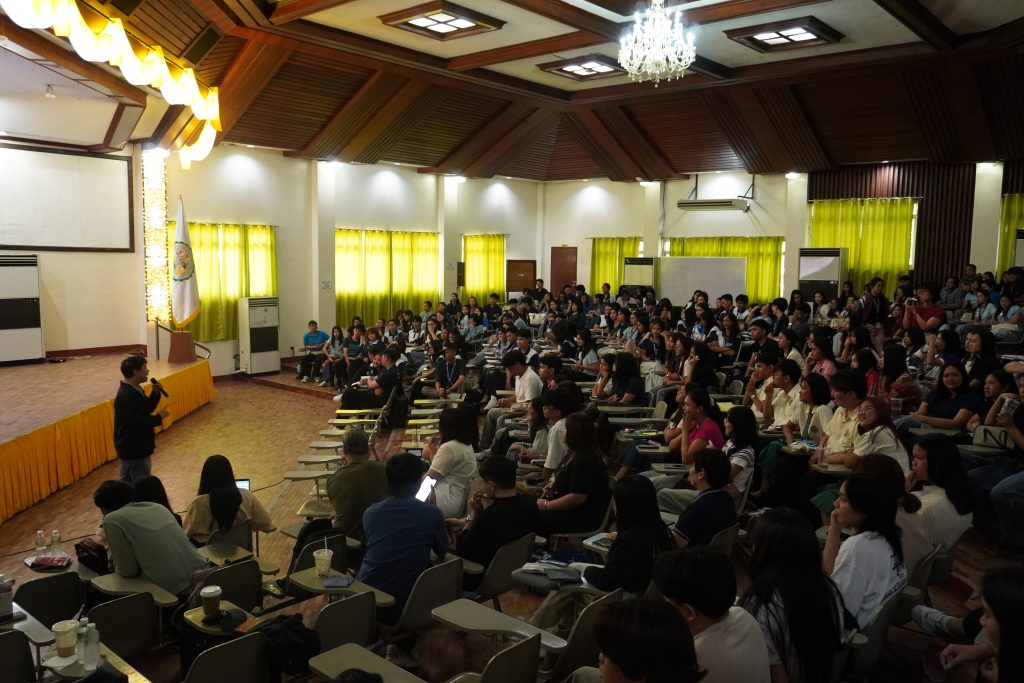
This became even clearer during the Language Documentation Training at PSAU, which brought together approximately 250 students and faculty members. The training was not only an opportunity to introduce methods of language documentation but also to hear how Kapampangan speakers understood the present situation of their own language.
One discussion that stayed with me concerned whether Kapampangan should be considered endangered. The responses were varied. Some participants observed that younger members of their families now use English or Filipino more frequently than Kapampangan, while others emphasized that Kapampangan remains widely used in their communities, especially outside formal settings. I realized that language vitality cannot be understood through a simple question of whether a language is “alive” or “dying.” It must be examined through the specific communities where the language is used, the ways it is transmitted, and the attitudes speakers hold toward it.
The training also gave me an early opportunity to observe how linguistic knowledge can be more complicated than it initially appears. While monitoring a word-list activity, I noticed that some Kapampangan speakers had difficulty immediately recalling the Kapampangan equivalents of certain words. They discussed possible answers, corrected one another, and sometimes remembered a word only after another participant suggested it. Some explained that they normally used Filipino or English for certain concepts in everyday life.
This made me reconsider what it means to “know” a word. A speaker’s hesitation does not necessarily mean that the speaker does not know the language. In a multilingual environment, a word may simply be more accessible in one language than another at a particular moment. The difficulty of retrieving a word may itself reveal something about how languages are used.
When we began visiting the barangays, the fieldwork became even more dynamic. We administered the Multilingual Language Profile and Community Language Profile and spoke with residents about their language practices, beliefs, and experiences. The questionnaires provided structure, but the conversations often extended beyond the questions written on the forms. Some questions required clarification, while some answers led to unexpected stories. I quickly realized that a questionnaire is not simply a script that must be followed mechanically. Structured instruments still require attentiveness to the participant and the interaction taking place.
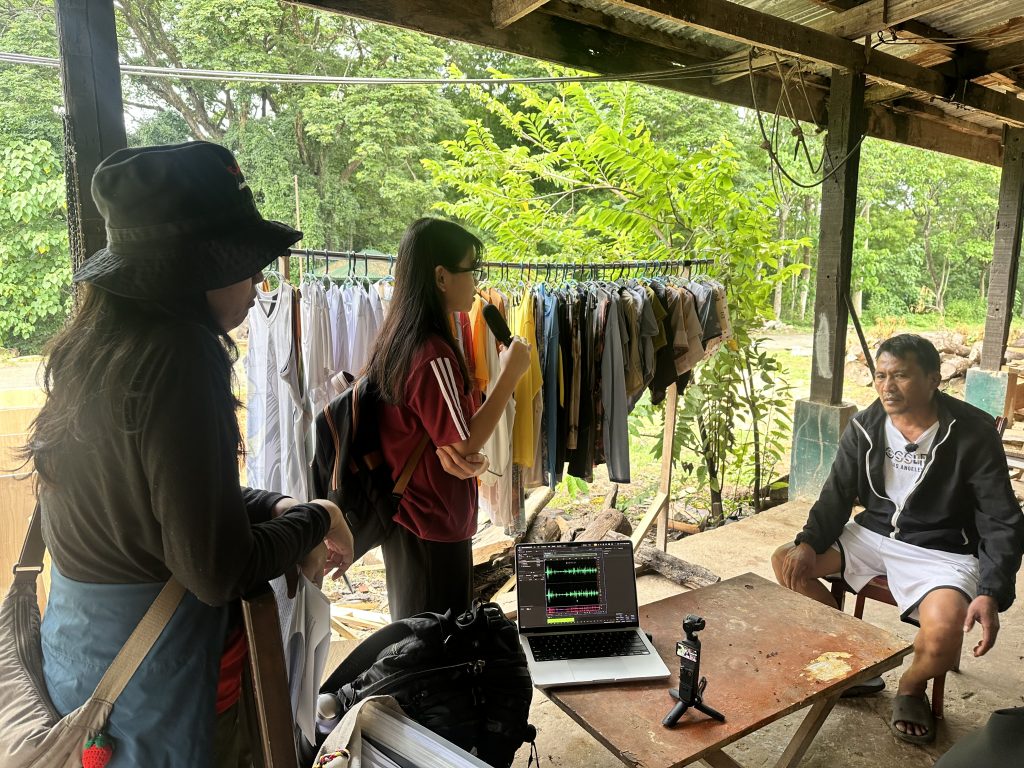
The participants also reminded me that language use is rarely as simple as assigning one language to one person. Many described Kapampangan as the language they had used throughout their lives, while explaining that they shifted to Filipino or English when speaking with people who did not understand Kapampangan. Others had learned Kapampangan later in life through family and community interaction.
One participant from Escaler particularly stayed with me. Born and raised in Iloilo, she had lived in Pampanga for many years after marrying a Kapampangan. Over time, Kapampangan became the language she used most. Her experience reminded me that linguistic identity is not determined solely by where a person was born. It can also be shaped by relationships, immersion, family, and everyday participation in a community.
At the same time, other conversations revealed concerns about language transmission. Some participants believed that Kapampangan should continue to be spoken by their children and grandchildren. Others observed that some parents now prioritize Filipino or English, particularly because they associate these languages with education and future opportunities. These different perspectives showed me that language vitality is not only about whether people can speak a language. It is also about what people believe about the language, what they choose to use with their children, and what they believe their children need.
Fieldwork also taught me to pay attention to language beyond the interview itself. While travelling between barangays, I noticed that public signages were generally written in Filipino or English, while Kapampangan remained highly visible in spoken interaction. In San Antonio, a barangay official spoke passionately about efforts to keep Kapampangan alive, including Kapampangan jingle activities during their fiesta. In San Pedro I, I finally encountered a public announcement written in Kapampangan after several days of intentionally looking for one.
I also began noticing language choices everywhere. In one community, I observed children speaking Tagalog among themselves. In another setting, groups of young people were conversing almost entirely in Kapampangan, with only occasional English words. These observations did not provide simple answers about the status of Kapampangan. Instead, they reminded me that language use varies across communities, generations, situations, and speakers.
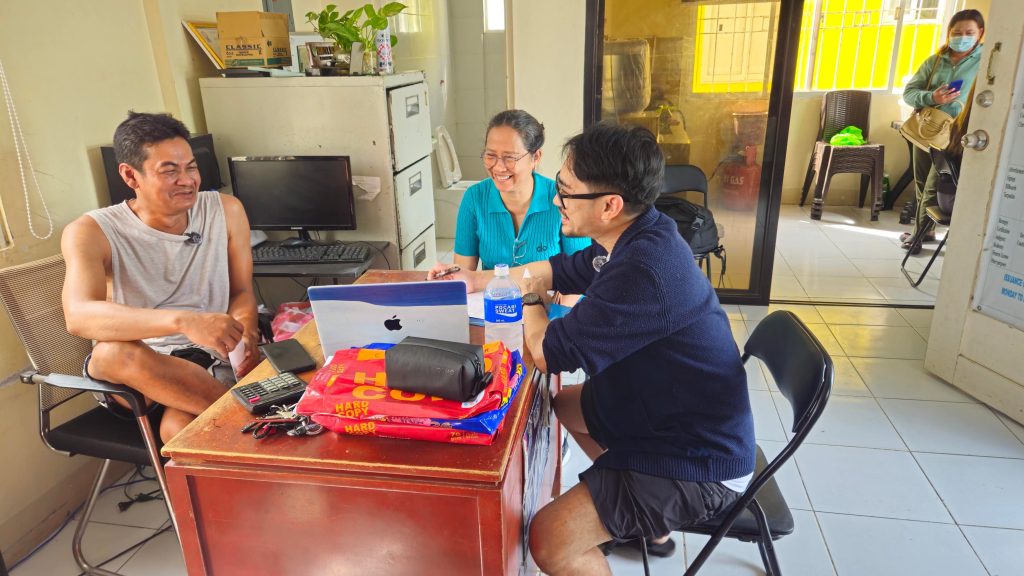
Perhaps one of the most striking patterns I observed was how naturally people shifted languages depending on whom they were speaking to. The collaborators often spoke Filipino or Taglish with us but immediately shifted to Kapampangan when speaking with other Kapampangan speakers. A campus security guard spoke Kapampangan over his radio, switched to Tagalog when answering our question, and then returned to Kapampangan. No one seemed to find the shift unusual.
The same thing happened during our interviews. Some participants answered me in Tagalog even when I asked a few questions in Kapampangan, yet immediately spoke Kapampangan when talking to a Kapampangan-speaking collaborator. This made me realize that language choice is not simply a matter of which languages a person knows. It is also shaped by familiarity, confidence, the interlocutor, and the social situation.
As someone who understands Kapampangan but is sometimes conscious about speaking it, I also became more aware of my own relationship with the language. I found myself hesitating because I was worried about saying something incorrectly. This made me more empathetic toward participants who hesitated during elicitation. Sometimes, the issue is not simply knowledge. Sometimes, it is confidence.
The fieldwork also taught me that documentation does not end when the participant leaves. Some of the most important lessons came from the less visible parts of the project: organizing recordings, checking metadata, renaming files, creating backups, converting audio formats, segmenting recordings, and working with Praat, ELAN, and FLEx. A missing participant code or incorrectly named file could create problems later. At one point, I had to redo segmentation because of a problem with the recording media. It was frustrating, but the experience made me appreciate that careful file management and backups are not minor administrative tasks. They are part of the documentation process itself.
Fieldwork also taught me to expect the unexpected. A participant might be busy. A recording might be interrupted by background noise or a passing tricycle. A scheduled location might become unavailable. An interview might suddenly pause because something outside the recording space requires the participant’s attention.
We also learned that collecting data does not mean collecting as much data as possible at any cost. On one occasion, we had planned to conduct another interview, but our participants were already occupied with their own responsibilities. We decided not to force the session. Respecting their time was more important than completing another instrument simply because it was part of the plan.
This became one of the most important lessons I took from the field: good fieldwork requires flexibility.
The same was true of collaboration. No one person could do everything. Some team members were more comfortable approaching potential participants, others focused on recording equipment, and some were more familiar with particular instruments. Our collaborators were especially important because they helped us coordinate with communities and clarify questions when necessary. Their involvement made many interactions more natural and reminded me that linguistic fieldwork is not something researchers simply “do to” a community. It depends on relationships and collaboration with people who know the community and understand its linguistic realities.
By the end of the fieldwork, I noticed that I had begun observing language without consciously trying to do so. While eating lunch, walking around campus, waiting for participants, or travelling between barangays, I found myself paying attention to what language people were using.
I was no longer simply listening to what people were saying. I was also noticing how they were using language.
That is perhaps one of the biggest changes the fieldwork brought about in me. It taught me to listen more carefully, not only to answers given during interviews, but also to the conversations surrounding them. It taught me to look beyond the questionnaire and understand that language vitality can be reflected in everyday choices: the language used at home, the language children use with one another, the language used in public announcements, and the language people choose when speaking to someone who shares their linguistic background.
Most importantly, the experience made language documentation feel less like the collection of linguistic data and more like an encounter with people and their lived experiences.
The Kapampangan language we documented was not a fixed object waiting to be discovered. It is present in conversations, code-switching, hesitation, family decisions, community activities, stories, and the different ways speakers understood their own relationship with the language.
Our fieldwork reminded me that documentation requires both technical precision and human attentiveness. We needed properly organized recordings, accurate metadata, and careful data processing. At the same time, we needed to listen to participants, respect their time, understand their perspectives, and remain open to the fact that language does not always behave according to the neat categories we create for it.
I began the project thinking that fieldwork was mainly about collecting data. I finished it understanding that fieldwork is also about learning how to observe, adapt, collaborate, and listen.
And perhaps that is what I will remember most from documenting Kapampangan in Magalang: sometimes, the most important things we learn about a language are not found in a single answer on a questionnaire. They emerge in the spaces between questions, in the language a person chooses when speaking to a neighbor, in the word someone suddenly remembers, in the story a participant shares after the recorder is turned on, and in the conversations that continue after the formal interview has ended.
Language documentation, I learned, does not simply preserve words. It preserves moments of language use, the experiences of the people who use those languages, and the complex realities that allow a language to continue changing, adapting, and living.
Trishia Kaye D. Jimenez is a Master of Arts in Linguistics student with research interests in critical discourse analysis, sociolinguistics, pragmatics, and language documentation.