

Alberto Vida | Lingg 225 [Field Methods in Linguistics] Class
Posted on September 2, 2026
July 18, 2026, 11 AM. I was sitting alone at the back of the car as it weaves along the traffic heading back home. It’s a weird feeling being back in Quezon City. I should be exhausted after two weeks of hectic fieldwork in Magalang Pampanga but somehow a calm stillness descended over me. Those two weeks were worth it.
I can still remember how I was on the edge two weeks prior. I arrived at the back of Palma Hall at 6:30 AM with an empty wallet and a case of imposter syndrome. Personal life has a way of intruding and possibly disrupting a planned fieldwork that I had to do. I replaced my ATM card the day before and a last-minute ATM failure meant I was heading into the field with zero cash—a panic only resolved when my teammate Pau agreed to withdraw money for me before the van left the campus. Without cash I wouldn’t have been able to buy food or pay for the laundry and transportation while in Magalang. Now that money has been sorted, I wondered to myself “I spent two weeks reading about fieldwork, and now I am supposed to “train” hundreds of students?” as I sit in the van headed toward Magalang. It’s the workshop that’s been at the back of my head the most. I felt wildly underprepared: not just on using equipment I hadn’t touched in years which I plan to use in the actual fieldwork, but for standing in front of over a hundred students and faculty at Pampanga State Agricultural University (PSAU) to “train” them. Moreso lately because I have been getting forgetful. A sign of old age maybe? I could not retain in memory most of what I have read days before.
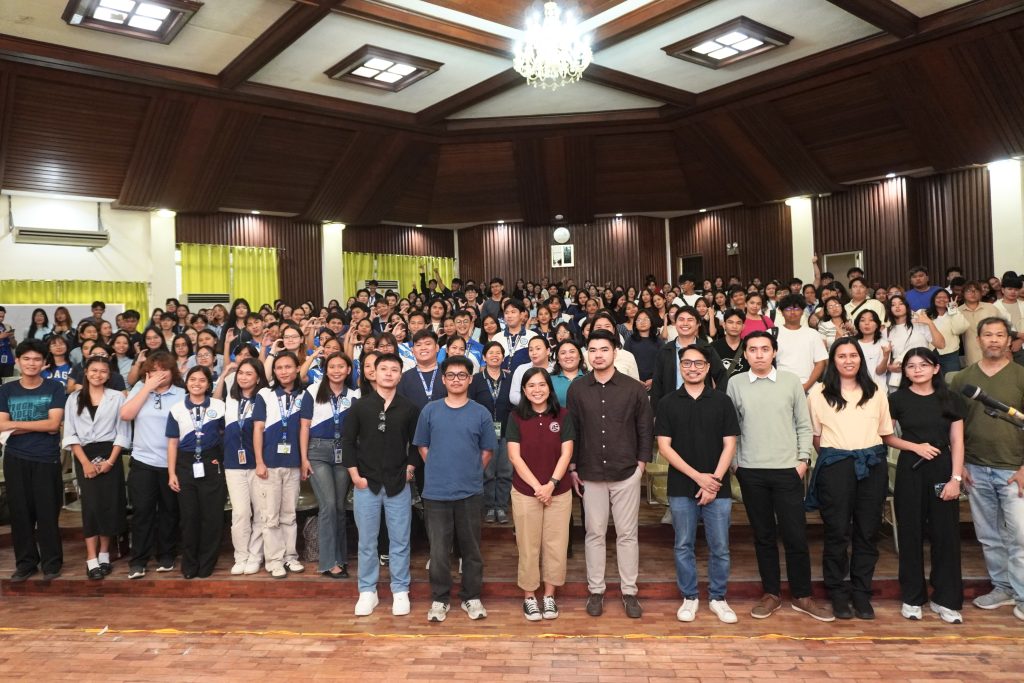
I had always been an anxious person wanting to control every aspect of everything. Realizing that overthinking my preparation was only fueling my anxiety, I decided to let go and trust the process, lean into curiosity, and bring an unpolished version of myself to the project. The second day came and our class delivered and facilitated the workshop. I personally think it was a great success! All my teammates delivered their parts well, and some were even a revelation. The students were eager to hear, to be heard, and to participate especially on the Q&A part and the hands-on elicitation session. PSAU was an outstanding host and collaborator. That workshop reminded me that it isn’t about being a know-it-all (in a positive sense) researcher that matters; it is about standing on my feet, adapting in the moment, accepting my vulnerability, improvising based on instincts and ingenuity, and connecting with other humans. Gaps in my understanding are there to keep me interested, grounded, and appreciative of the strengths of the other members of my team. Right there and then I knew that this fieldwork would work out just fine.
The next eight days was the actual fieldwork. For three days, my team of two, which is Pau and I, had to visit about half of Magalang’s 27 barangays to get at least three participants per barangay for the vitality assessment surveys. The other barangays will be covered by the other team consisting of Leo, Trishia and Mike. My team’s collaborators Ms. Karina, Ms. Noreen, and Ms. Andrea eased our introduction to the LGUs as well as walked with us when there were no ready participants in the barangays. During my team’s second day in Barangay La Paz, we hit a wall when our scheduled male participant was unavailable. Rather than giving up, our coordinator Ms. Noreen and PSAU observer Justin walked the streets with me, house-to-house, searching for a replacement participant. Justin knew someone in this barangay, so we followed him as he carried my heavy equipment bag under the sun, eventually leading us to a resident he knew. There, his friend woke up one of his sons, a former OFW, who graciously sat through the interview. This was repeated in Barangay Camias as well, where the barangay hall was closed when we arrived, so we had to walk the streets, asked around and after about 20 minutes of walking, chanced upon a sari-sari store vendor who was happy to participate. I did not find these instances discouraging, rather my thought process was “Now is the chance to do actual fieldwork. How exciting! What an opportunity to do what I had only imagined doing before.” It was also encouraging seeing how it’s done by Pau who is a seasoned fieldworker.
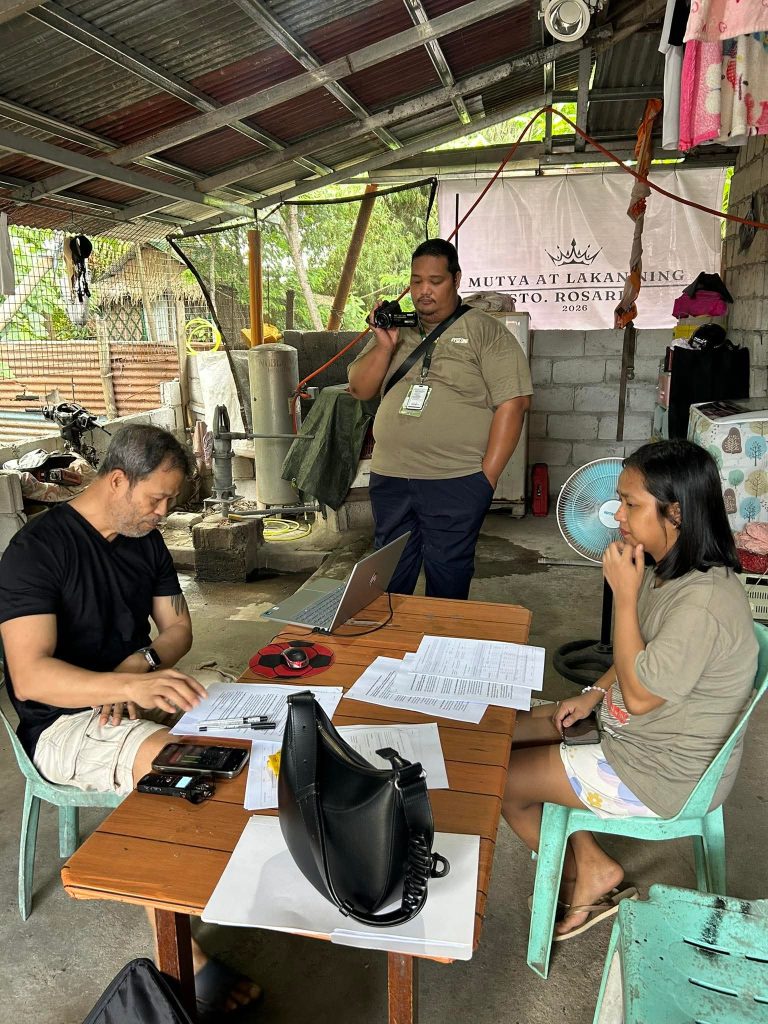
The inevitable technical failures became opportunities for adaptability. On my first day in the barangays, my Zoom H1n recorder unexpectedly auto-powered off, my GoPro battery died after two sessions, and I was left scrambling to convert iPhone .m4a files into .wav format using a newly downloaded app late at night in the hostel. Fieldwork forced me to make do with whatever was available—whether that’s troubleshooting audio recording inside ELAN or buying just white bread and peanut butter at 8:00 PM for tomorrow’s breakfast on my first evening when all the roadside canteens have closed. And Pau was generous lending her recorder once she was done.
Linguistic documentation is never a solo endeavor. Without the collaboration and logistics provided by PSAU, we would not have completed the survey in three days. From our very first meeting with Carlo de Dios and the PSAU English Department faculty, it was clear that they were the reliable support system of our barangay surveys. They helped us navigate local realities—especially managing the logistics of zone-by-zone barangay visits and collaborators who would join us.
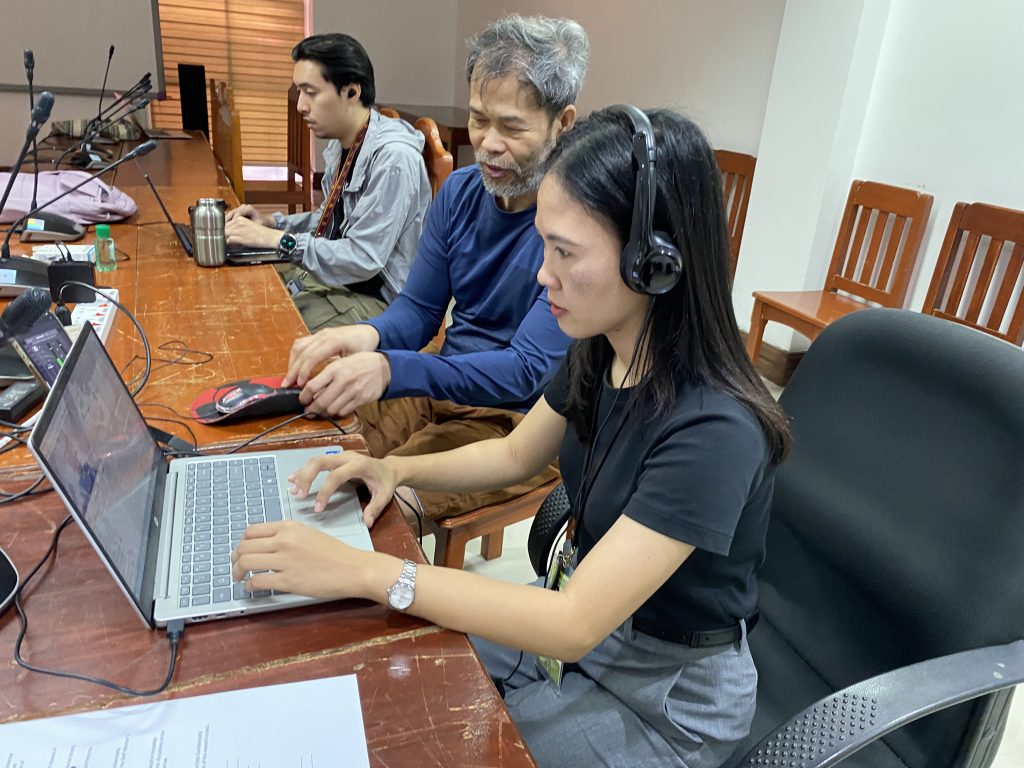
After the vitality assessment survey, we moved on to do the next phase of our fieldwork, which is doing language documentation. Leo and I found the same spirit of generosity during our intensive sentence-list elicitations with Sir Japs. Over the course of two long days, Sir Japs didn’t just translate sentences; he opened his office to us. As we hooked our laptops up to the large monitor in his office to work through the sentence list, he served us boiled white corn, spiced arroz caldo, and hotdog sandwiches. He refused the token we normally give to informants, preferring instead to share meals and stories about how PSAU came to be and his grandfather’s World War 2 death march experience. Through those relaxed conversations, theoretical syntax problems such as how to analyze portmanteau Kapampangan clitics consisting of cross reference pronouns, case markers and discourse markers, alternative word orders, and acceptability judgments on restructured sentences that Leo and I came up from ordinary Kapampangan translations of the sentence list became head-scratchers we solved together. Sir Japs was the ideal informant for this sentence list: a native speaker, chatty, outgoing, and understood the importance of documenting his language. Meanwhile, Leo is the perfect partner for this sentence list elicitation because like me he has strong interest in morphosyntax and worked with Sambalic languages before.
Later, when it came to transcribing our naturalistic interviews, Ms. Noreen sat down with me at the computer and typed out transcriptions and translations directly into ELAN before her 11:30 class. When software glitches wiped out part of our exported work, her patience and deep native-speaker intuition calmed me as I adjust utterance boundaries in Praat, reloaded the text copies, and recover those missing glosses.
Looking back at my daily field notes, my entries especially the early days were mostly about the glitches: failed ATM withdrawals, workshop worries, dying gadgets, missing recordings, unsync audio and video recordings in ELAN, conflicting syntax analysis in Flex, etc. But we do learn from mistakes and troubleshoot them, so these glitches dwindled as the days went and I had fewer of them to write about. It got replaced by warm feelings: the good reception of our preliminary findings at the exit conference, enjoyment of the sunset at Cafe Altezza, the relaxing long walk to Abe’s Farm, and the dinner including the pako salad at Abe’s Farm.
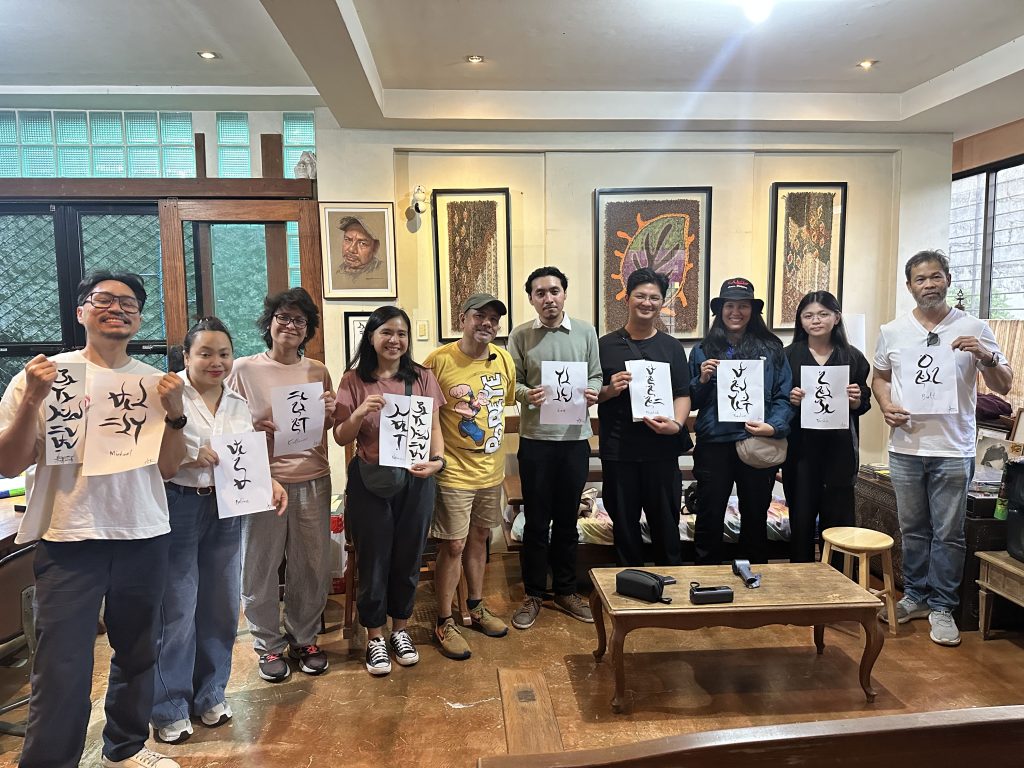
The last day of the fieldwork is a bit bittersweet because it is not just the last day (duh!) but because I really enjoyed a game of contact with my batch. From the start of the day when we had coffee, we had a game of contact which carried on as we visited Angeles City’s various tourist attractions and until our very last dinner. That game was fun. And the day, good as it was already, was capped by a frozen yoghurt dessert. As we head back to the hostel, I was seated in front of the van. I felt good. My Lingg 225 batch was great. I know we would move on with each of our own lives, but this fieldwork will stay with me, just as artist Norman Tiotuico’s Kulitan calligraphy of my name would.
To any student preparing to head into the field: it is completely normal to feel underprepared. Theoretical knowledge is just a starting point. What carried me through is the willingness to be an “uncarved wood” ready to be shaped by experience and the strength of the team around me. Language does not live in pristine textbooks or isolated audio files—it lives in the people who speak it, the collaborators who guide us, and the lasting relationships we build along the way.
Alberto Vida is a Master of Arts in Linguistics student.